ESG Highlights
Klabin in numbers
21
Plants across ten Brazilian states, and one in Argentina
More than
18
thousand direct employees
annual production capacity of
2.8M
tonnes of paper
annual production capacity of
1.6M
tonnes of pulp
Brazil’s largest producer and
exporter
of paper
Financial highlights
-
Adjusted EBITDA of R$7.848 billion, up 7% from 2024.
-
5% growth in net revenue compared with the previous year, reaching R$20.7 billion.
-
R$1.2 billion distributed in dividends and interest on equity, corresponding to a dividend yield of 5.3%.
-
0.6x reduction in leverage.
-
Reduction in the average cost of U.S. dollar-denominated debt from 5.7% to 5.2% per year.
In 2025, the Company surpassed the milestone of 1 million tonnes of products exported in containers.
Governance
The Company announced the succession process for the Paper Commercial Executive Office and the Finance and Investor Relations Executive Office. The transition is being carried out under a plan coordinated by the Board of Directors and supports the continuity of high-performance management.
Building a renewable future
In 2025, Klabin assessed how the KODS converged with mandatory sector-specific topics. This enabled the Company to consolidate its Double Materiality Matrix, which brings together topics relevant to the Company and its stakeholders, considering impacts on society and the environment as well as financial impacts. The process underscores the Company’s commitment to continuously improving its sustainability management approach.
Water use
Despite production growth, the Company reduced its total water withdrawal. This performance reflects strengthened water management across its industrial Plants, expanded measurement and monitoring systems, and the implementation of initiatives aimed at reducing losses and waste.
41.13%
reduction in specific water consumption*
18.2%
reduction in specific water use*
*Compared with the 2018 baseline year.
Resource use and circularity
The development of an Integrated Waste Management Plan covering all industrial Plants will strengthen the periodic monitoring of actions related to this topic. The focus is on identifying alternative waste disposal routes and improving waste segregation processes at the Plants.
99.49%
of industrial waste was reused or sent for recycling
10 cases
of circular economy benchmarking were developed in partnership with customers, suppliers, and other value chain stakeholders
Climate change
In 2025, Klabin updated its Climate Transition Plan, which sets out the Company’s strategy for aligning its operations and value chain with a pathway consistent with limiting global warming to 1.5°C. The plan considers climate-related risks and opportunities, as well as mitigation, adaptation, and resilience strategies.
Follow the progress of the Company’s new, more ambitious emissions reduction targets, approved by the Science Based Targets initiative (SBTi):
Climate change
Reduce absolute Scope 1 and 2 emissions by 42% by 2030 compared to the 2022 base year. Period: 2022 to 2030
Climate change
Reduce absolute Scope 3 emissions by 42% by 2030 compared to the 2022 base year. Period: 2022 to 2030
Climate change
Reduce absolute Scope 1 and 2 emissions by 90% by 2050 compared to the 2022 base year. Period: 2022 to 2050
Climate change
Reduce absolute Scope 3 emissions by 90% by 2050 compared to the 2022 base year. Period: 2022 to 2030
93.4% is the share of renewable sources in Klabin’s energy mix, exceeding the 2030 target of 92%.
Biodiversity
The Company reinforced its commitment to transparency and biodiversity conservation by becoming a TNFD* Adopter. In practice, by incorporating the recommendations of this framework, Klabin can enhance risk management and provide greater visibility into financial opportunities related to biodiversity, land use, water use, and climate change.
* The Taskforce on Nature-related Financial Disclosures (TNFD) is a global initiative that provides recommendations and guidance for organizations to disclose their approach to nature-related dependencies, impacts, risks, and financial opportunities.
866 fauna species and 2,041 flora species were identified
in High Conservation Value Areas (HCVAs) and some of Klabin’s remaining natural areas.
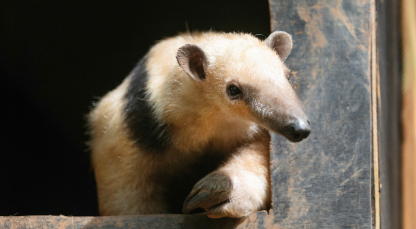
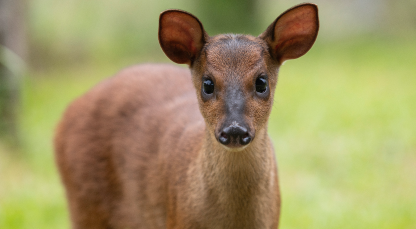
More than 460 animal rescues and over 170 releases
were carried out by the Parque Ecológico Klabin (Klabin Ecological Park - PEK).
Social license to operate
Klabin’s acceptance rate among local communities reached 86.3%, the highest level recorded since the Impact and Performance Assessment Survey* was launched in 2021.
*The survey is conducted in municipalities where Klabin has industrial or forestry operations with relevant social impacts, covering operations in Paraná, São Paulo, Santa Catarina, and Pernambuco. Eight dimensions are assessed: perception of impacts, economic development, environmental preservation, job creation, commitment, image, social development, and business.
258
social dialogues held across 48 municipalities
6
Klabin in the Community events, held, with more than 3,000 visitors recorded
20
municipalities reached through in-person meetings between Klabin and local government representatives
People development
-
Consolidation of a continuous learning culture through EKOA, an ecosystem that connects content, people, tools, and experiences.
-
Launch of the Strategic Culture Evolution Plan, structured around the pillars of Rituals, Development, and Communication. Leaders and employees were encouraged to act more consciously, with priority focus on the “Efficiency” and “Ownership” competencies.