Local development
Restructuring to strengthen activities and pursue new goals
Throughout 2025, the programs and processes of the Social Responsibility and Community Relations area underwent a structural review. This initiative was important to improve processes, optimize the team’s field operations, and modernize tools and methods to strengthen the Company’s positive relationship with communities. The work focused on three areas:
Structuring of governance and processes
Review and standardization of processes, workflows, manuals and indicators to increase the maturity level of social management

Territorial prioritization and relationship structuring
Development of a Social Prioritization Matrix to guide where and how to focus relationship-building efforts, impact prevention and local development

Review of Klabin Transforma (Klabin Transforms) programs
Reassessment of the programs’ scope, methodology and results, focusing on directing efforts toward greater impact, alignment with the business and institutional strengthening
The prioritization of municipalities took into account aspects such as local context, number of Klabin employees in the municipality, dependence on taxes generated by the Company’s activities, planning of forestry operations in the coming years, areas impacted by increased truck traffic from Klabin operations and other indicators. This mapping will serve as a guide for strategic decisions, resource allocation and work focus.
Due to the review process, the Klabin Transforma (Klabin Transforms) programs also underwent a period of restructuring, critical analysis, pause and/or reduction of activities.
The Programa de Apoio à Gestão Pública (Public Management Support Program) underwent a thorough evaluation. After analyzing the results and contributions generated over time, the decision was made to conclude the initiative in its current format, recognizing that the program had fulfilled its role in driving positive progress for municipalities. It is worth noting that it should be reapplied in a targeted manner in new situations requiring this type of initiative, and that Semeando Educação (Sowing the Seeds of Education), Matas Sociais (Community Forests), Território Circular (Circular Territory), and Klabin Caiubi continue to represent forms of support for public management, albeit in a targeted way and aligned with Klabin’s challenges. By addressing these specific topics, the Company contributes to stronger local communities, supporting local development and contributing to public policies in line with the Company’s strategic demands.
The Klabin Transforma Semeando Educação (Sowing the Seeds of Education) Program will return in 2026 in a new format. It will be offered in 13 priority municipalities and will initially focus on school administrators. Expectations for this new phase include conducting a diagnosis of strengths and opportunities within the education systems of the municipalities, which will serve as the foundation for activities in the coming years. In addition, the program will help leadership teams support the emotional health of education professionals.
The Klabin Transforma Matas Sociais (Community Forests) program, whose purpose has been to strengthen production planning, support food sales and generate sustainable income, will also be revised. After 10 years of this journey, the Company began a broad restructuring process through workshops with strategic partners, seeking to learn from the program’s history and results and to build its future for the coming years.
2025 SESI SDG Awards
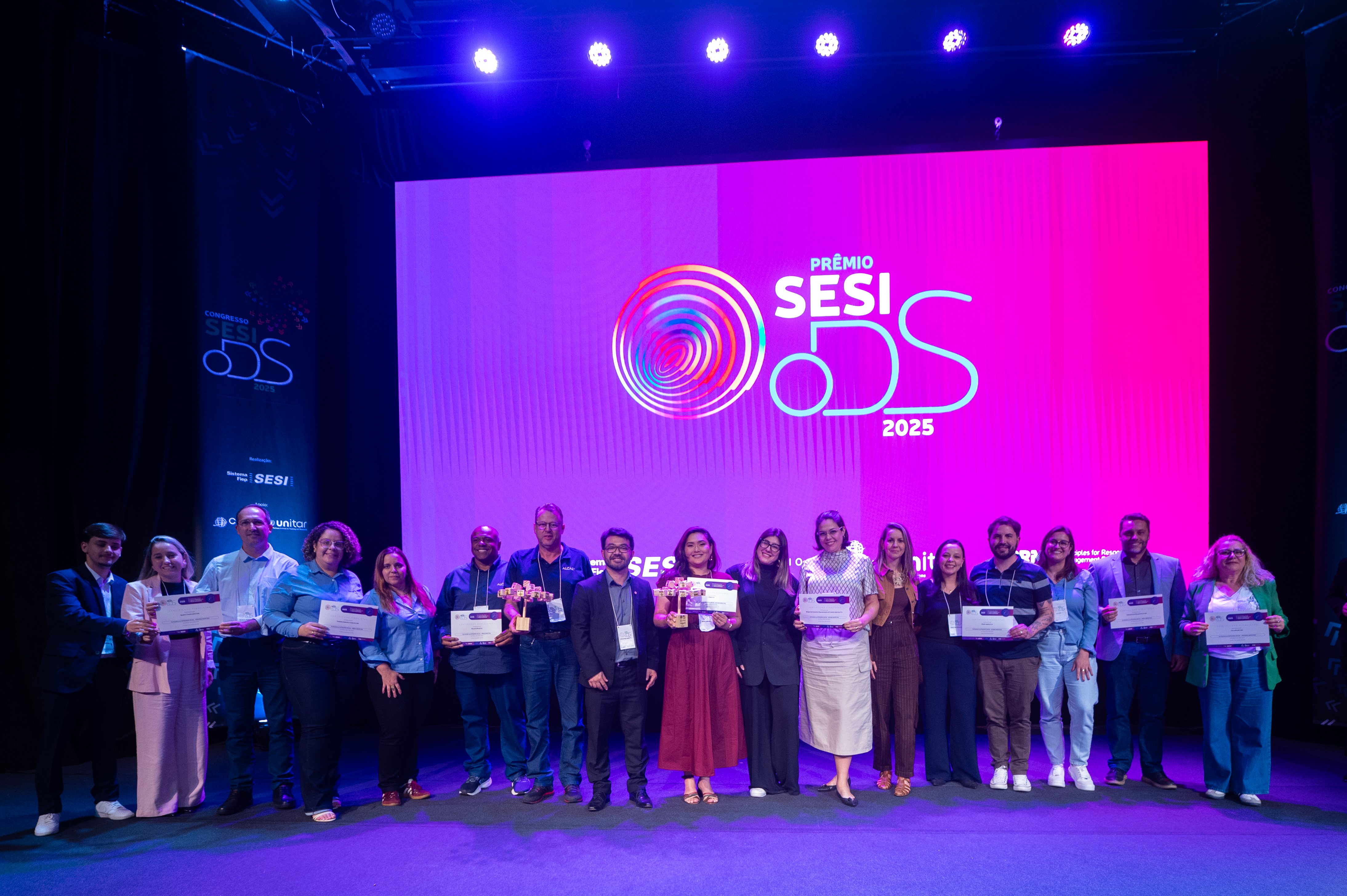
Klabin received recognition in the 2025 SESI SDG Awards in the Social—Large Industry category for a case study about the Sowing the Seeds of Education Program. This awards program recognizes organizations that incorporate the United Nations 2030 Agenda into their strategies and operations, highlighting initiatives that positively impact workers, communities and the environment.
The award highlights the transformative role that companies play by integrating sustainable practices into their business strategies.
Social license to operate
In 2025, Klabin’s acceptance rate among local communities reached 86.3%, the highest level since the Impact and Performance Assessment Survey* began in 2021. It is worth noting that the Company’s goal is to remain above 80%. The continued improvement of this indicator reflects efforts to build a relationship of trust between the Company and the community.
This work is strengthened by local presence and the promotion of dialogue. Highlights of these efforts in 2025 include:
258 social dialogues
held in 48 municipalities
6 editions
of the Klabin in the Community event held, attracting over 3,000 visitors
20 municipalities
where Klabin conducted direct interactions and in-person meetings with public authorities
*This survey is conducted in municipalities with significant industrial or forestry operations in terms of social impacts, including in Paraná, São Paulo, Santa Catarina and Pernambuco. Eight dimensions are evaluated: perception of impacts, economic development, environmental preservation, job creation, commitment, image, social engagement and business.
Listening to the community
Klabin has several channels through which community members can submit questions, requests, suggestions, compliments and complaints. In 2025, the processes for recording, reviewing and responding through this system were revised to improve service quality.
-
E-mail: faleklabinpr@klabin.com.br
-
Phone numbers: 0800 728 0607 (Paraná/São Paulo) or 0800 721 0228 (Santa Catarina). Calls are free and the channel is available 24/7.
Among the various requests received in 2025, dust management remains a major challenge for the Company and one of the main reasons for complaints through these channels. In 2025, there were 455 complaints, representing an increase of 37% compared to 2024. The expansion of forestry operations and lower-than-usual rainfall made this type of complaint more frequent.
Strategies to mitigate the impact include road wetting, the adoption of alternative routes whenever possible and the involvement of operational teams to align best practices.
Relationships with traditional communities
Work to identify Indigenous peoples, Quilombola communities (composed of descendants of runaway slaves) and Faxinal communities (villages in central Paraná that use land communally) underwent a review in 2025, based on an improved methodology. The process resulted in a reduction from 177 to 60 identified communities and the radius of influence was updated from 10 km to 5 km in relation to forest management areas. As a result of these changes, Klabin is focusing its support efforts on 16 neighboring communities, including 10 Quilombola, three Indigenous and three Faxinal communities.
In 2026, the Company will begin updating the characterization of these communities by holding meetings and visits to deepen its understanding of their specific characteristics, identify customary rights, understand their relationship with Klabin’s neighboring areas and identify possible impacts generated by operations.
During the 2025 FSC® forest management audit, the criteria related to Indigenous or traditional communities under the new standard were fully assessed. The independent audit team identified compliance, demonstrating consistency in this relationship. Our work with traditional communities is based on the principle of free, prior and informed consent, which seeks transparency in relationships and respect for the decisions of these groups.
Donations and Sponsorships
In 2025, Klabin allocated R$ 22.08 million to more than 170 projects across 13 states and 71 municipalities in Brazil.
Klabin supports initiatives aligned with its Donations and Sponsorships guidelines, based on four pillars of action: culture and citizenship, development, education, and the environment.
In addition to these pillars, Klabin evaluates projects primarily based on geography and impact. One of its guiding principles is to prioritize supporting the development of communities located in the vicinity of its industrial and forestry operations.
-
Culture and citizenship: we support projects that promote cultural attributes through artistic expressions across different regions of the country. We believe that encouraging sports and solidarity initiatives are important pillars for strengthening citizenship. We also work to preserve the memory of the Company and of communities connected to its foundation and development.
-
Development: we contribute to the economic, social, and cultural strengthening of the communities where we operate, fostering planning capacities and participatory public management towards sustainable development.
-
Education: we develop and support programs aimed at strengthening people’s education through actions focused on improving management, infrastructure, and pedagogical practices.
-
Environment: we develop programs to foster environmental awareness, biodiversity conservation, and best practices in the use of natural resources. We promote research and knowledge generation related to sustainability and strengthen environmental stakeholders through income-generation initiatives and programs.
Donations
Sponsorships
¹ Klabin also makes in-kind donations (including mill by-products, paper rolls, corrugated cardboard packaging, equipment and other materials) to several municipalities where it operates forestry and/or industrial facilities. These donations are not included in this table.
² Sponsorships aimed at the commercial promotion of the Company’s brand or products are not included in the scope of the processes/table described above.