Innovation
Innovation connected to everyday operations
Continuing the work carried out in 2024, the Research, Development and Innovation (R&D&I) area supported factories and commercial areas in optimizing their processes and products. Throughout 2025, multidisciplinary teams developed projects focused on wood quality, operational efficiency, cost reduction and product performance improvement, among other areas. In addition to this technical support, the Company maintained short-, medium- and long-term research projects.
Fuel produced from forestry residues (branches and leaves). It is mainly used for heating and electricity generation.
GlossaryNatural polymer present in the cells that make up wood. It is responsible for giving plants strength and can be used in the manufacture of adhesives and rubber, for example. One recent successful case involves the use of lignin as an antioxidant in rubber manufacturing.
GlossaryHighly refined cellulose capable of increasing the strength of various materials. It can be used in the production of specialty papers and construction materials, in the textile and cosmetics industries, and in the production of industrial formulations.
GlossaryDerived from pine trees, this chemical product can be used in the pharmaceutical, food and cosmetics industries. Turpentine is also considered a renewable fuel.
GlossaryAcid composed of sulfur, oxygen and hydrogen, widely used in industry. The Ortigueira site in Paraná has a plant that transforms gases generated during wood cooking into this chemical compound. Part of the acid is used by Klabin itself in its production line and the surplus is sold.
GlossaryChemical compound used as fertilizer. At Klabin, it is produced from the treatment of ash generated in the recovery boiler and derived from the wood that supplies the operations. The Company uses part of it and sells the surplus.
GlossaryOil generated during the production of pine pulp, derived from the resin of this species. It is used in the lime kiln at the Ortigueira Plant in Paraná as a substitute for fossil fuels, while the surplus is sold.
GlossaryAround 40,000 metric tons of new products were produced for the external market, especially sulfuric acid, CTO and turpentine.
Award-winning MFC
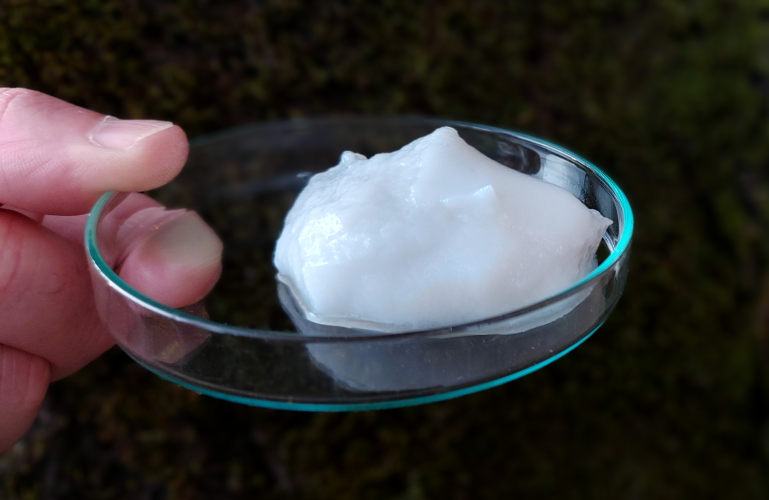
The use of microfibrillated cellulose in different segments has been recognized as an innovative and sustainable alternative. In 2025, Klabin achieved second place in the Paint & Pintura Innovation Awards with the project “Application of MFC in Architectural Paints.” In this case study, microfibrillated cellulose was added to paints to help control the product’s viscosity, elasticity and flow. In the GIMI Innovation Awards, Klabin earned third place due to its partnership with Kind to produce cosmetics containing MFC.
Microfibrillated cellulose
Why is this work strategic for Klabin?
Linking research and innovation to the day-to-day operations of factories and businesses brings numerous benefits to the Company:
-
It strengthens sustainability- and circularity-oriented innovation;
-
It accelerates product diversification through the development of new materials and consequently expands business opportunities;
-
It contributes to value generation by promoting operational efficiency and improving product quality;
-
It provides technical support to units and customers and helps accelerate product approval processes;
-
Studies on renewable fuels support the advancement of the Company’s green energy mix.
Klabin develops innovation through three technology centers:

Klabin Technology Center (CTK)
It seeks to improve product quality by anticipating trends and creating sustainable technologies and applications. It uses technologies to replicate processes, simulate manufacturing and accelerate product development.

Forest Technology Center
Its work is guided by the Company’s strategy to promote efficiency and competitiveness in the forestry chain through the development and delivery of technical solutions applicable to the business. Highlights include the development of highly productive clones adapted to climate and soil conditions and industrial demands, as well as the adoption of forest management best practices aimed at maximizing productivity, reducing operational risks and strengthening Klabin’s competitive advantage in forestry productivity.

Packaging Technology Center (CTE)
An experience center that creates projects in partnership with customers based on their needs and challenges.
Centro de Tecnologia Klabin (CTK)
Busca aprimorar a qualidade dos produtos, antecipando tendências e criando tecnologias e aplicações sustentáveis. Conta com tecnologia para replicar processos, simular a fabricação e acelerar o desenvolvimento de produtos.
Centro de Tecnologia Florestal
O foco do trabalho é a cadeia florestal, com desenvolvimento de estudos sobre melhoramento genético, qualidade da madeira, solo, adaptação às mudanças climáticas, controle de pragas e biotecnologia, entre outros.
Centro de Tecnologia de Embalagens (CTE)
Centro de experiências que cria projetos em parceria com clientes a partir de suas necessidades e desafios.
Klabin recently received approval from the Brazilian Innovation Agency (FINEP) to finance projects in the areas of biotechnology, cybersecurity, data science and automation technology. The Company’s approval demonstrates its high standards of management and transparency in the use of resources, as well as the strategic value of the initiatives developed.
Innovation that expands value for customers
Continuous innovation is one of Klabin’s strategic pillars to strengthen its position in the global pulp market. After the launch of a product, the Company continues to invest in research and development to enhance competitiveness and meet the constantly evolving demands of its customers.
Fluff pulp, mainly used in the manufacture of diapers and absorbent products, has recently incorporated odor-control technology for use in these applications. Following the qualification process, the solution has already started to be requested by customers in China, increasing its differentiation potential and value generation.
Another highlight is PineFluff eXcel, the world’s first product to combine short and long fibers in a single solution. Developed by the Klabin Technology Center (CTK) over approximately five years, this innovation delivers improved liquid retention and distribution, as well as a higher perceived softness for end consumers. Launched in 2022, the platform already includes five commercial versions, demonstrating the Company’s ability to transform technical knowledge into high value-added solutions.
In 2026, Klabin will continue investing in the evolution of its portfolio, strengthening partnerships with customers and developing solutions aligned with the demands of the markets in which it operates.
Packaging innovations
In 2025, Klabin intensified its activities in the fruit and vegetable segment, developing cabbage boxes adapted for automated processes. The new boxes allow producers to replace wooden packaging with corrugated cardboard and are already being marketed. Other products for this segment that can help preserve food and consequently reduce waste are also being tested.
Another innovation was the development of paper bags for transporting onions and potatoes—a sustainable alternative to raffia, sisal and acrylic fiber bags. Following technical approvals, industrial-scale production is expected to begin in 2026.
In the protein sector, the Company developed packaging solutions that eliminate the need for glue, generating productivity gains for both Klabin and its customers. The boxes have already been approved by buyers and production is set to begin in 2026.
Innovation in numbers
More than
R$48
million invested
Four Intellectual Property Grants*
and seven new applications in Brazil and abroad
* 1) Brazil – Computer Program Registration “Input Matrix System” – BR512025004516-6, issued on September 23, 2025. Protects the software developed to support the recommendation and definition of inputs for weed and ant control, contributing to greater efficiency in field routines and decision matrix management. 2) Brazil – Patent “Paper Bag” / Shelf-Life 1 Project – BR102018011357-7, granted on December 16, 2025. Protects a structural solution applied to paper bags, strengthening Klabin’s paper packaging portfolio in Brazil by integrating, in a single packaging solution for granular materials, moisture barrier properties, contaminant retention, and controlled deaeration. 3) Russia – Patent “White-Top Kraft Liner Paper, Method of Producing Said Paper, Use of Paper and Packaging” – RU 2845077 C1, granted on August 13, 2025. Protects white-top kraftliner paper and its production process, using short eucalyptus fibers and a strengthening additive, with associated improvements in sheet formation, print quality, and physical-mechanical properties. 4) Uruguay – Patent “Paper and Paper Manufacturing Process Using Microfibrillated Cellulose in Cellulose Pulp” – No. 15853, granted on November 4, 2025. Protects the use of microfibrillated cellulose in pulp for the production of kraft paper, sack kraft paper, or paperboard, with a focus on increasing strength and improving performance for packaging materials.
Innovation champion
Klabin was recognized as the most innovative company in Brazil’s South region in the Innovation Champions survey conducted by Grupo Amanhã. This initiative assesses the maturity level of innovation management in organizations based on the Innovation Management Index, a tool that evaluates pillars such as strategy, processes, culture and resources. In addition to ranking first overall, the Company led the Resources category (which measures investments and synergies aimed at innovation) and the Organization category (which evaluates innovative management structures and tools).
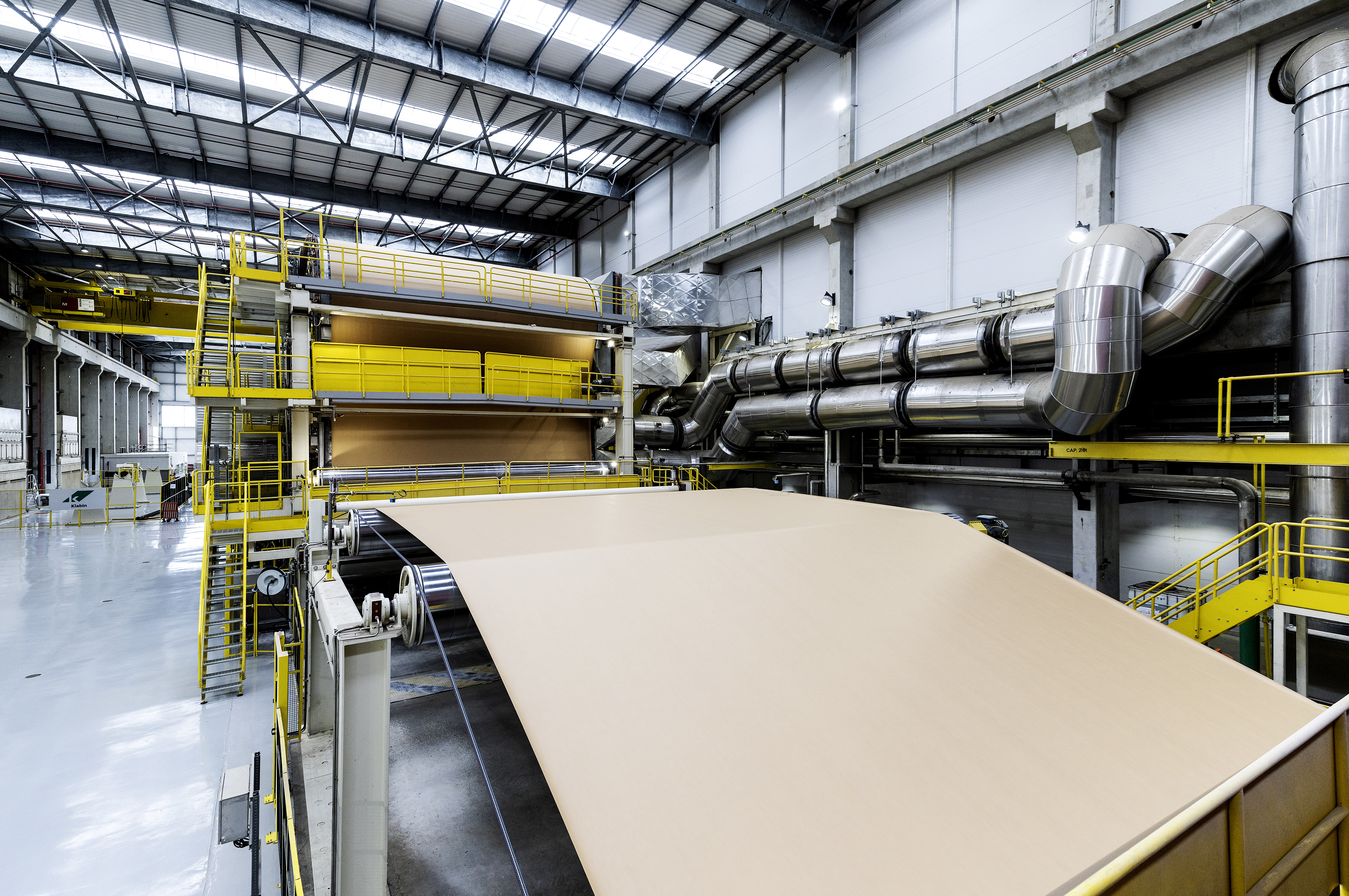
Paper Machine 28, in Ortigueira Plant (PR)
Highlights of forestry research
Genetic improvement is a strategic area of forestry research and development aimed at delivering more productive genetic materials better adapted to the Company’s areas. The most relevant characteristics for each species are defined, such as wood productivity, resistance to pests and diseases, wood quality and adaptation to climate conditions, after which the best individuals are selected. These superior materials are then multiplied at scale through cloning, enabling that the target characteristics are present in all planted trees, which enhances operational efficiency throughout the forestry value chain. Highlights in this area are presented below:
-
In 2025, six new eucalyptus clones with high pulp productivity per hectare were recommended. They will join the 26 already developed by the Forestry R&D area and will gradually become part of the planted operational base;
-
Seven pine clones with greater fiber productivity potential per hectare were selected and recommended. They will undergo somatic embryogenesis and will then be directed to operations;
-
The somatic embryogenesis* process, which enables pine cloning, was consolidated. Having incorporated this technology into R&D processes, the Company will have more homogeneous and productive plantations, reaching new levels of competitiveness for the species;
-
The experimental base was expanded through the planting of new genetic materials in forestry expansion areas. This work makes it possible to understand how well each genetic material adapts to new areas and, based on this, recommend the best clones for each of the Company’s planting regions. It will also allow the same clones to be evaluated under different environmental conditions, helping adaptation to climate change.
* In vitro cloning technique that enables the formation of embryos from somatic cells, i.e., the cells that make up most of the plant body and are not reproductive cells (gametes) or germ cells. This technique allows the production of a large number of embryos in a limited space.
In 2025, 95% of eucalyptus plantings carried out in Paraná used genetic material developed by Klabin’s Forestry R&D area. The use of these seedlings generates significant gains in productivity per hectare, maintaining Klabin as a global leader in forestry productivity.
The tree nursery makes it possible to increase the production of clones that will be tested in the field and may later be recommended for production.
In another initiative to care for its forests, the Company participated in forestry protection forums aimed at developing control and containment measures for new pests, a risk monitored daily by Klabin. To strengthen this work, the number of monitoring points in Klabin’s forests increased from 40 to 214 over the past year, reinforcing the Company’s response capacity.
Leadership in generating scientific knowledge
Research carried out by Klabin has the potential to benefit the entire forestry sector, especially regarding the adaptations needed to address the consequences of climate change.
In 2025, Klabin once again participated in the Marcus Wallenberg Prize, an international awards program recognizing innovative studies for forestry and forest industries. As part of the event’s Young Scientists panel, researcher João Gabriel Zanon Paludeto presented the Company’s Enviromics tool, which defines production environments for allocating the best clones and genetic materials.
Research on this topic is still underway, but the expectation is that the tool will contribute to a deeper understanding of operational areas and indicate which genetic materials may perform best in these environments, even under adverse conditions caused by climate change.
Klabin also participated in a study on new factors for quantifying biomass and consequently carbon allocation in different parts of trees, such as roots and trunks. The study was conducted by SilviCarbo—a cooperative program led by the Institute for Forestry Research and Studies (IPEF), together with the Brazilian Planted Forests Association (Ibá) and other forestry-sector companies. The new parameters are more accurate and will support the preparation of emissions and carbon capture reports in the forestry sector. The study’s results were published in the journal Global Change Biology and can be accessed here.
Researcher João Gabriel Zanon Paludeto presenting the Enviromics tool.
Close alignment with operations and industry
In 2025, the Forestry R&D team was an active agent in the INTEGRA+ project (read more in Forestry), reviewing silviculture processes, proposing the adoption of technologies developed by Klabin itself and making science-based recommendations. One example was the recommendation of customized fertilization based on the characteristics and needs of each stand, with tailored fertilizer mixes designed to supply the necessary nutrients.
The Forestry R&D team’s work on the INTEGRA+ project generated savings of R$12 million for the Company.
The team also carried out wood quality analyses, which are used as a basis for supplying the Company’s mills.